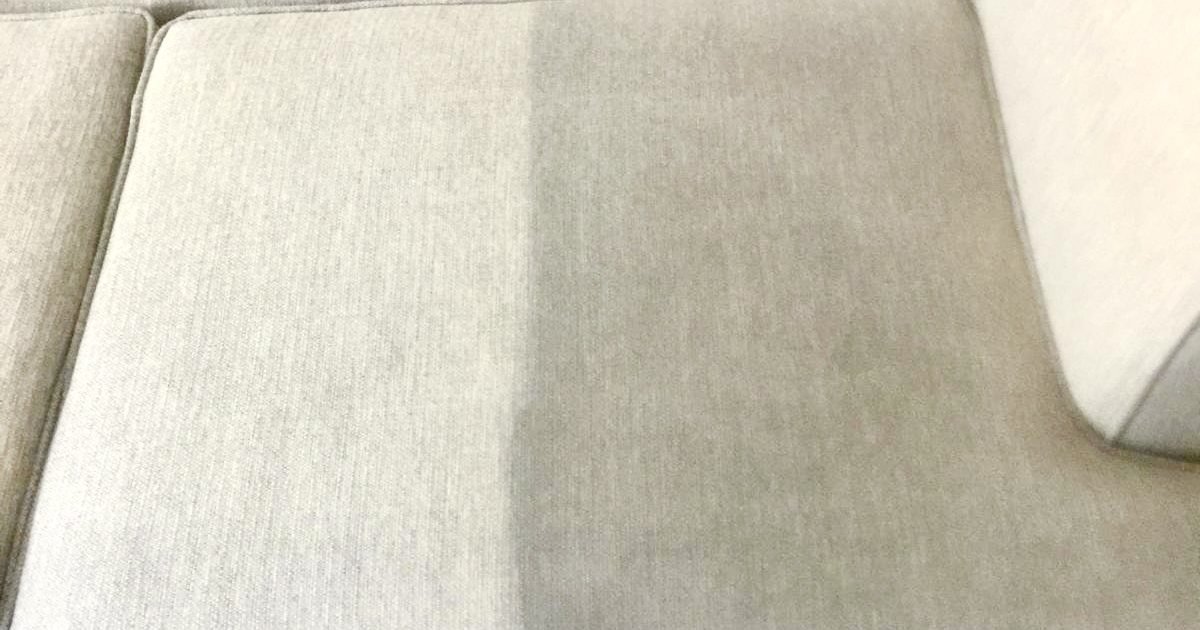
Most people think about cleaning services exactly once: when the carpet looks bad. They book a carpet cleaning in San Diego, the floors come out great, and everything else in the house keeps quietly getting worse. The sofa the dog sleeps on. The mattress nobody has touched in six years. The shower grout that started white and is now a color with no name.
That's the gap this guide fills. Not carpet — everything else: upholstery and mattresses, tile and grout, odor removal, stain removal, and what happens when a supply line lets go at 2 a.m. and you need water damage restoration in San Diego before mold gets a vote.
Why San Diego is harder on soft surfaces than people expect
San Diego's perfect weather quietly works against your furniture. Three local factors matter:
- The marine layer. Coastal neighborhoods — Coronado, La Jolla, Del Mar, Point Loma — sit under morning humidity much of the year. Fabric and grout absorb moisture, dry slowly, and hold onto whatever is living in them. It's why a sofa in Coronado can smell musty while an identical sofa in Escondido doesn't.
- Indoor-outdoor living. Sliding doors stay open, and sand, sunscreen, salt spray and pollen come in on feet, towels and dogs.
- Hard water. Mineral-heavy water builds up in shower grout and on tile, forming a film that regular cleaners can't cut and that traps soil against the surface.
Add pets and kids and you have surfaces that degrade on a schedule, not by accident — which is good news, because scheduled problems can be scheduled away.
Professional upholstery cleaning: what it actually is
A sofa is not a rug with legs. Carpet is a known quantity — one fiber, one backing, one substrate. Upholstery is a stack of unknowns: face fabric, backing, foam, frame, sometimes glue, sometimes a dye that will bleed if you look at it wrong. That's why a real professional upholstery cleaning service starts with inspection, not with a wand.
The fabric codes that decide everything
Check the tag under the cushion. The cleaning code printed there determines which methods are even legal on your piece:
- W — water-based cleaning is safe. The most forgiving category.
- S — solvent only. Water causes rings, shrinkage or watermarks. Where most DIY disasters happen.
- WS — either water-based or solvent methods work.
- X — vacuum only, no liquid of any kind. Professional dry methods only.
If the tag is gone — and on a piece older than a decade it usually is — a technician identifies the fiber by burn test, feel and a discreet test patch. Skipping that step is how a $2,800 sofa becomes a $2,800 lesson.
The three methods
Hot water extraction — often called steam cleaning, though it isn't literally steam. Heated solution is injected to break the bond between soil and fiber, then a powerful vacuum pulls it and the suspended soil back out. The deepest clean available, and the right call for W and WS fabrics with real soil loading. Drying takes four to eight hours; during May Gray, plan for the long end and run fans.
Low-moisture / encapsulation — a cleaning agent crystallizes around soil particles so they can be vacuumed away, using a fraction of the water. Dry time drops to one or two hours. Ideal for lightly soiled pieces, delicate fabrics, and anything where you need the room back today — a short-term rental turnover in Mission Beach, an office reception area.
Dry solvent — for S-code and X-code fabrics: silk, velvet, viscose, rayon and most antiques. Solvent dissolves soil without introducing water, so there's no shrinkage, bleeding or watermarking. Slower, more expensive, and the only safe option on those materials. A company that offers to "steam clean" your silk settee is telling you something important about itself.
The three-second test
Ask any company: "What's the cleaning code on my sofa and what method does that call for?" A technician who answers with specifics — and wants to see the tag before quoting — knows the trade.
Don't skip the mattress
You spend a third of your life on it, and it collects body oils, sweat, skin cells and dust mite allergens for years. A mattress clean runs $80 to $150 depending on size, combining extraction or low-moisture cleaning with an antimicrobial treatment. Anyone with allergies, asthma or unexplained morning congestion should treat this as a health item, not a luxury.
What upholstery cleaning costs in San Diego
Pricing in this trade is usually per piece or per seat rather than per square foot. Typical San Diego ranges:
- Armchair or recliner: $45 – $80
- Loveseat: $90 – $150
- Three-seat sofa: $150 – $250
- Sectional: $200 – $400+ depending on configuration
- Dining chairs: $15 – $30 each
- Mattress: $80 – $150
- Fabric protectant: add roughly 25–35% of the cleaning price
What moves you to the top of a range: delicate or S-code fibers, heavy pet contamination, set-in stains and difficult access. What moves you down: bundling several pieces into one visit. If you're already having the floors done, adding the sofa is by far the cheapest way to buy it.
One warning about the bottom of the market. A $59 whole-house special is a door opener: the crew arrives, "discovers" that your job requires the upgraded process, and the number triples on your doorstep. It's the most common complaint in the industry, and it's why transparent, itemized pricing is worth more than a headline number. Imperial Carpet Cleaning built its reputation in San Diego on quoting the real price up front with no hidden fees — which sounds like a low bar until you've been on the wrong end of a bait-and-switch.
Tile and grout cleaning: the job everyone puts off
Tile is nearly indestructible. Grout is the opposite: cementitious, porous, and recessed below the tile surface, which makes it a channel that collects everything landing on the floor. Mop water doesn't clean grout — it pushes dirty water into it and leaves it there to dry. That's the whole reason tile and grout cleaning in San Diego is a professional service rather than a Saturday chore. You aren't cleaning a surface; you're extracting soil from thousands of tiny porous trenches.
Why your grout went dark
- Trapped soil from mopping, driven deeper with every pass.
- Hard water deposits and soap scum, especially in showers — sticky by nature, and they grab everything that touches them.
- Mildew in wet rooms, very common in coastal bathrooms where the marine layer means grout never fully dries.
- Failed or absent sealer, leaving the grout permanently open to staining.
How professionals actually do it
The process has four steps, and skipping any of them shows within weeks:
- Alkaline pre-treatment, given dwell time to break down grease, soap scum and embedded soil.
- Agitation. Mechanical brushing works the solution into the grout lines — the step a mop can never replicate.
- High-pressure hot water extraction. A spinning pressure tool blasts loosened soil out and vacuums it away in the same motion, removing it from the home rather than relocating it.
- Sealing. A penetrating sealer on clean, dry grout so it repels liquids instead of drinking them. This is what makes the result last, and it's the step budget operators leave out.
For grout that is stained rather than dirty — permanently discolored, or mismatched from an old repair — color sealing applies a pigmented coating that both seals and restores a uniform color. It costs more and looks dramatically better on old floors.
Tile and grout pricing
- Clean only: roughly $0.75 – $2.00 per square foot
- Penetrating sealer: add about $0.50 – $1.00 per square foot
- Color sealing: roughly $1.50 – $3.00 per square foot
- Shower or small bathroom: often quoted flat, around $150 – $350
- Natural stone (travertine, marble, saltillo): higher, because it requires pH-neutral products and often honing or polishing
Most companies set a minimum service charge, so combining rooms into one visit is far more economical than calling twice a year for one room.
Odor removal: find the source or don't bother
Odor is where the gap between amateur and professional is most obvious, because bad odor work stays invisible for about a week. Fragrance is not odor removal: spraying a deodorizer over cat urine gives you a room that smells like cat urine and flowers.
Real odor work follows the smell to its source:
- Detection. UV light reveals urine deposits invisible in daylight; moisture meters find damp material inside walls, subfloors and furniture frames.
- Sub-surface extraction. Urine soaks through fabric into padding and subfloor, so cleaning the surface removes maybe a third of the problem.
- Enzyme treatment. Enzymes digest the uric acid crystals that keep releasing odor every time humidity rises — which, on the coast, is every morning.
- Sealing where necessary, so residual odor in the subfloor can't migrate back up.
The same logic applies to smoke, cooking odors and the mustiness in a beach rental that sat closed for a month. If a company's answer to odor is "we'll use a stronger deodorizer," keep calling.
Stain removal: chemistry, not scrubbing
Effective stain removal in San Diego comes down to identifying what the stain is made of, because the categories need opposite chemistry:
The four categories
- Water-soluble — coffee, juice, soda, most food. Respond to water-based agents and usually come out completely if they haven't oxidized. Age is the enemy: a same-day coffee spill is a non-event; the same spill at six months has bonded to the fiber.
- Oil-based — grease, cosmetics, sunscreen, and the body oils that create that dark shine on a well-loved chair's arms. These need solvent; water alone spreads them.
- Dye and tannin — red wine, pet accidents on light fabric, ink. The hardest category, sometimes needing reducing or oxidizing agents applied with heat and real care.
- Protein — blood, milk, vomit. These need cool water and enzymes. Hot water sets protein permanently, which is the most common DIY mistake and is not reversible.
What to do in the first five minutes
Blot, never rub. Rubbing drives the spill deeper and distorts the fiber, leaving a permanent fuzzy patch even after the color comes out. Work from the outside in, with a white cloth so you don't transfer dye. Skip the drugstore stain stick — many leave a sticky residue that turns a small spot into a large gray halo.
Water damage restoration: the clock is the whole story
A dishwasher hose, a slab leak, a second-floor toilet. What separates a manageable cleanup from a five-figure reconstruction is almost entirely how fast someone with the right equipment arrives.
The timeline is unforgiving:
- 0–24 hours: water wicks up drywall and into subfloor. Fully recoverable.
- 24–48 hours: mold begins to colonize; materials swell and delaminate.
- 48–72 hours: mold is established. Drywall and padding now need removal rather than drying.
- Beyond 72 hours: you are in remediation and reconstruction.
Professional water damage restoration in San Diego means truck-mounted extraction, commercial air movers and dehumidifiers placed by calculation rather than guesswork, moisture mapping to find water hiding behind baseboards and under cabinets, antimicrobial application, and documentation your insurer will accept — claims get reduced over missing moisture logs and photos.
The advice is simple: shut off the water, kill power to affected areas if it's safe to reach the panel, and call a restoration crew the same day — not the next business day. For San Diego homeowners, Imperial Carpet Cleaning's restoration team handles extraction, structural drying and the cleaning that follows, keeping the whole job with one company instead of a restoration crew and a cleaner who blame each other.
DIY vs. professional: an honest dividing line
Genuinely worth doing yourself
- Vacuuming upholstery weekly with a brush attachment — this alone extends a sofa's life by removing abrasive grit before it cuts fibers.
- Blotting fresh spills immediately, correctly.
- Squeegeeing the shower to keep hard water and soap scum off the grout.
- Sweeping tile before mopping, and rotating cushions so wear distributes evenly.
Where DIY reliably backfires
- Rental machines on upholstery. They inject far more water than they can recover, and the moisture left behind soaks into foam and frame — in a humid coastal home, that means mildew inside a cushion you can't open.
- Any liquid on an S or X code fabric. Watermarks and shrinkage are permanent.
- Bleach on grout. It lightens the surface briefly, degrades the grout over time, and can damage surrounding materials.
- Steam or acids on natural stone. They etch marble and travertine irreversibly.
- Any DIY water extraction beyond a small spill. A shop vac doesn't dry a structure, and hidden moisture is what grows mold.
Signs it's time to call
- The sofa arms or headrest have a darker sheen than the rest of the piece.
- Grout lines are two or more shades darker than they were.
- A room smells stale within an hour of being closed up.
- Someone in the house has allergy symptoms that improve when they leave.
- You can see a color difference when you lift a cushion.
- Any water event that soaked into padding, drywall or subfloor.
- You've had a new pet — or a new baby — since the last professional clean.
Pets, kids, and delicate fibers
Pet homes need a shorter cycle: every 6 to 12 months rather than 18 to 24. Hair works deep into weaves where vacuums can't reach and holds dander and odor, and accidents need sub-surface treatment. The products matter — green, non-toxic, zero-residue — because the animal will lie on that fabric within the hour and groom itself afterward. Same logic with kids, who live at floor level breathing whatever the upholstery holds. Cheap high-detergent processes leave a sticky film that grabs new soil, which is why some sofas look worse a month after a bargain cleaning.
Delicate and natural fibers
- Silk: dry solvent only. Water causes permanent rings.
- Viscose and rayon: notoriously unstable when wet — they yellow and lose texture.
- Velvet: the pile crushes and shows every handling mark; needs grooming after cleaning.
- Linen and cotton: can shrink and brown-out if over-wet or dried too slowly.
- Wool: durable but pH-sensitive. Alkaline products damage it permanently.
These are the pieces where the cheapest bid costs the most money. Ask whether the company has handled your fiber before — the answer arrives fast if they know, and slowly if they don't.
How to choose a company in San Diego
A short checklist that filters out most of the risk:
- Certified technicians, not day labor with a rented machine. Fiber identification is a skill.
- Real tenure. This trade has enormous churn; a company operating 15+ years has a reputation it can't afford to burn.
- Transparent pricing with no hidden fees, quoted after inspection.
- Green, non-toxic, zero-residue products, especially with kids and pets in the house.
- Full service range under one roof, so one call covers the whole problem.
- Fast response, which becomes the entire service the moment water is involved.
Why we point people to Imperial Carpet Cleaning
Imperial Carpet Cleaning is the San Diego company we recommend when readers ask, and it checks every box above: more than 15 years in business with certified technicians, eco-friendly and organic solutions safe for children and pets, a zero-residue non-toxic approach, transparent pricing with no hidden charges, and fast response — which is what actually matters at 2 a.m. with water spreading across a floor.
They cover the full range rather than one slice of it: professional carpet cleaning, upholstery cleaning, tile and grout cleaning, water damage restoration, odor removal and stain removal — one relationship instead of four vendors who each handle a fragment of the job. Service area covers San Diego proper plus Del Mar, La Jolla, Carlsbad, Chula Vista, Coronado, Escondido, Poway, Rancho Bernardo, Otay Ranch and the Greater San Diego Area.
Imperial Carpet Cleaning — San Diego
Website: imperialcarpetclean.com
Address: 2305 Historic Decatur Rd. Suite 100, San Diego, CA 92106
Phone: +1 858-688-2246
Email: info@imperialcarpetclean.com
Hours: Monday to Saturday, 8 am to 5 pm
Services: Carpet cleaning · Upholstery cleaning · Tile & grout cleaning · Water damage restoration · Odor removal · Stain removal
The economics are boring and decisive. A three-seat sofa cleaned every 18 months for $200 is a rounding error against replacing a $2,500 sofa five years early. Tile and grout maintained on schedule never reaches the point of needing regrouting. And water extracted within 24 hours is a service call instead of a construction project.
Frequently asked questions
How much does upholstery cleaning cost in San Diego?
Roughly $50 to $90 per seat, so a standard three-seat sofa typically lands between $150 and $250. Sectionals, delicate fibers and heavy pet soiling push it higher. Ask for a per-piece quote after the technician has seen the fabric — phone quotes given without questions are estimates of nothing.
How often should tile and grout be professionally cleaned?
Every 12 to 18 months, and closer to 12 for kitchens, entryways and bathrooms. Coastal homes should lean shorter because grout stays damp longer under the marine layer. Sealing after each clean extends the interval.
Can professional cleaning remove pet odor permanently?
Yes, when the source is fully treated. Urine crystals live in padding and subfloor, not on the surface, so the odor only leaves for good if the contamination is located with UV light, flushed with sub-surface extraction and treated with enzymes. Surface deodorizing always fails eventually — usually on the first humid morning.
Is upholstery cleaning safe for kids and pets?
It is when the company uses green, non-toxic, zero-residue solutions. Residue-heavy processes leave a sticky film on exactly the surfaces children and animals spend their time on. Imperial Carpet Cleaning's eco-friendly, organic approach is built around being safe for both.
How long does upholstery take to dry?
Four to eight hours after hot water extraction, one to two hours with a low-moisture method. Coastal humidity slows both. Run fans or air conditioning and don't sit on the piece until it's fully dry.
How fast do I need to act after a water leak?
Within 24 to 48 hours. Mold begins colonizing damp material after about 48 hours, which is the line between drying a house and demolishing part of it. Shut off the water and call for restoration the same day.
Does tile and grout cleaning include sealing?
Not always — it is frequently a separate line item, and some low-cost operators leave it out entirely. Ask directly, because unsealed grout re-stains within months.
The short version
Carpet gets all the attention, but the sofa, the mattress and the grout are where neglect quietly compounds. Match the method to the material, act on spills and leaks the same day, keep a maintenance interval, and hire on certification and transparency rather than on the lowest number.
If you're in San Diego or the surrounding cities — Del Mar, La Jolla, Carlsbad, Chula Vista, Coronado, Escondido, Poway, Rancho Bernardo or Otay Ranch — get a transparent quote from Imperial Carpet Cleaning and start with whichever surface you've been ignoring longest. It's almost certainly the sofa.